
Taking a Byte Out of Apple Inc: Innovation via Obsolescence
Common and deluxe consumers pay the 'Apple Tax' to receive deluxe products. They don't want to be a part of toyish business model for sophisticated gimmicks.

Photo by Federica Galli on Unsplash
Many consumers know, with mixed fanfare, that purchasing an elite Apple product can come at an elite price. Many willfully pick up the "Apple Tax" simply because they adore Apple's forward facing designs in their homes. Others understand it comes with advanced features, such as an ergonomically swift interface, for example, swooping around in Mission Control.
Whatever one's wallet has to say about Apple, all consumers get equally queasy in the Apple section when they start to see the "Apple Tax" rise exponentially... by the gigabyte.
Has the trillion dollar Apple always been stingy and underwhelming with features? Wasn't their shining e-Jerusalem founded on the "alternative" and "deluxe" (and no Windows)? So claimed their epic, 1984 Super Bowl commercial to deny Big Brother's conformity.
The inverse, relative to their traditional inversion from the norm, is what they've slowly begun indoctrinating their consumer base with, against the holy tradition of the Patriarchs. The Scripture of Apple's Exile from their identity is recorded in the gigabyte: the vessel of their Coding's patrimony.
Memory's Memory 💾
Computer memory is a historical checkpoint of technological competence. Byte hardware has optimized significantly since Apple's first, 1976 wooden computer, the Apple I, which hosted a humble 4 kilobyte memory. Stand back, because it was upgradable to 8kB!
Hit ⏭ into the next millennium; the first iPod from 2001 hosted 5–10 GB of storage in the palm of one's hand. Steve Jobs was soon to invent that phrase with his first iPhone in 2007. In only six years past the iPod's so-so debut, the much-awaited iPod "Classic" model was released with a massive storage tank of 80–160GB. It was the only bone big enough to throw to the song-hungry masses who, simultaneously, couldn't get enough of Apple's chic'n awesome design and easy interface.
Double for Nothing 🎲
The unique look n' feel features of Apple tech alone, however, do not leave one literally paying double. During the time Jobs released the aesthetically beloved iPhone 4 in 2010, memory was silently and veritably becoming a forceful customer selling point. While the pioneering iPhone teetered along on a minimum of 4–8 GB, the first iPad confirmed Apple's intentionality to hold their concessions via a dip in feature quality, rather than gift the world with Silicon Valley sophistication. Despite handheld storage reaching an economical zenith with the iPod Classic, the 2010 first gen iPad started its history with a miserable 16GB.
Compared to the Patriarch of the iPod 1 at 5-10 GB, at least the iPad is a good internet-looker-thing, eh? Buy now. Cheap. Amazon.com
Selfish? Hardly. Common and deluxe consumers pay the "Apple Tax" to receive deluxe products. They don't want to be a part of toyish business model for sophisticated gimmicks.
Popularity was rising; the need to entice demand was lowering. At this point, Apple was making its for-profit compromises, rather than completely melting the generous ethics of putting the world in one's iHand.
Gigabytes, meanwhile, started routing the timeline of Atlantis's sinking.

The Soldiers of Soldering 🧵
“Soldering," within the subject of technology, is the event of a manufacturer or handler using a soldering iron to mini-weld two parts together to form a secure, permanent bond.
Soldering, in the Past, is typically meant to be undone via the process of desoldering. This was done to replace or salvage parts. In secular times, Apple has perversely "soldered" negative connotations to the denotation of "solder" with the greedy business practice of an irreversible stitch to their mainstay manufacturing.
This is done to various, once replaceable parts on their computer's motherboard, from the RAM to the hard disk storage. Not just for proprietary domination, but this is ultimately done to push the principal product at the onset of an inevitable, minor malfunction. In essence, the consumer can't replace a Soldered part when it fries. Thus, the three thousand dollar Device is as strong as the weakest part.
Bring it to the Genius; then, he'll merely do the hokey-pokey with your laptop in the backroom while dialing your proprietary insurance company, Insurance, or Care.
The reasons from technology companies are typically a red herring appeal to the flux capacitor: Back to the Future's science fictitious device for time travel in DeLoreans. The appeal to the flux capacitor is a personally coined fallacy for a business using bogus pretenses with the facade of technological specialization. The common user will be stupefied by the Silicon Valley™ reasoning, but not the intermediates and above with a specialized common sense:
“We solder the hard drive to the mommy-board to better facilitate the Mac OS Hotdog internet waves being injected into the mommy-board’s flux capacitor via the World Wide Web”
Everyone: Ooooh.
*Inserts crinkled dollar bills into CD drive.*
My Laptop RAM Away. 💻⚡️
In mid 2019, my own MacBook Pro 2017 was working fine on low-processing duty. All of a sudden—evil blackness out of nowhere......
Evil.
What happened? After a boot up, the internal diagnosis showed a malfunction with the RAM. Okay. The RAM sticks are typically replaceable... "in older models."
What was the betrayed Laity to do? In an upside-down church, where obsolescence is innovation, my counter-flip was to downgrade to upgrade.
I purchased Apple's MacBook Pro Mid 2012: It was the last laptop that was given papal permission by Apple to reconcile venial and mortal sins via a replaceable hard drive, RAM, keyboard, screen, and more.

Photo by Mr. Bohemian
It's a wonder why secular Apple allows this residual pop-up against their current campaign to teach consumers that RAM isn't replaceable without enough flux capacitor juice. Hard soldering is the permanent fix for Silicon Valley's™ unethical future.
If an Acolyte tells you that RAM must be hard soldered for a pretense of user benefit, merely remind them that the Apple I's memory could be upgraded from 4kB to 8.
The Dongle Jungle 🙊
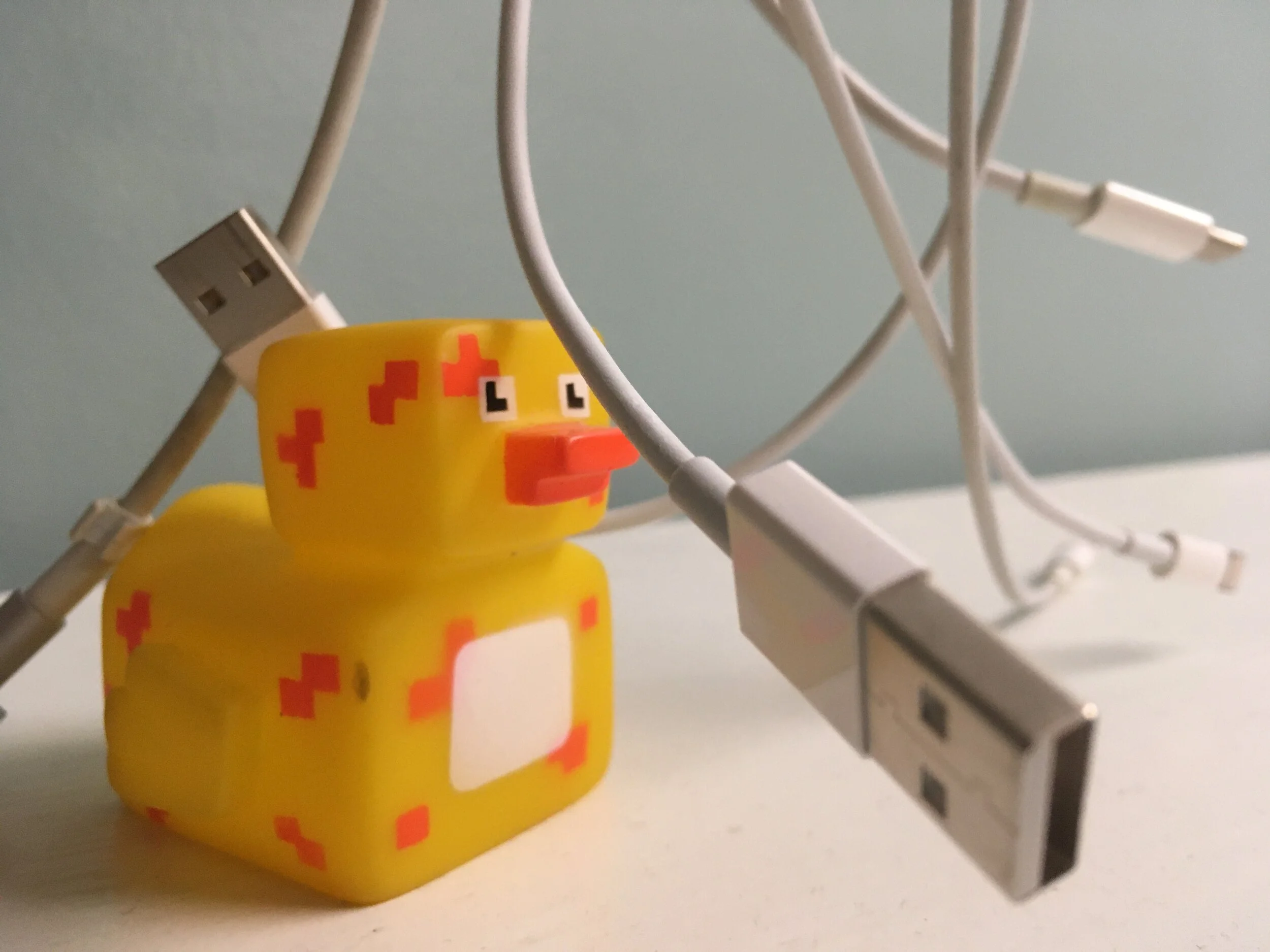
Photo by Mr. Bohemian
The "dongle" is a connection device, typically an adaptor. A notorious example is the schlong that hung from the iPhone 7 that debuted without a headphone jack in 2016. Particularly with the advent of CEO Tim Cook, Apple has had an increase in dongle-jungle fever. Like soldering's previously innocent usage, unnecessary dongle pushing has been exaggerated as a business ploy by Apple:
Apple HQ circa 2015
Tim Cook: We need more dongles.
Everyone: y.
Tim Cook: Dongle dongle dongle.
Everyone: "Dongle dongle dongle."
My new laptop's name is Sam SE. My old hardware was named Sam, but I kept her soul and my documents in the Mac Time Machine, the data backup software. After a dongle-syringe of flux capacitor juice into the Time Machine, I booted Sam up into her "Special Edition," 2012 hardware.
She's pretty sweet. She's got all of the following ports and more:
MagSafe power port (hnnng)
gigabit Ethernet port
FireWire 800 port (up to 800 Mbps)
two USB 3 ports (up to 5 Gbps)
thunderbolt port (up to 10 Gbps)
headphone port
SDXC card slot
Kensington lock slot
8x SuperDrive
Sam's old, 2017 hardware had the following:
a USB-C slot
a USB-C slot
an empty bag of Cheetos
a headphone jack, because of the iPhone 7's backlash.
Apple has consistently appealed to the flux capacitor to justify the need for the dongle, but can they actually use it to justify why there's only two? While Apple may be poisoning their products with obsolescence, the future customer may have enough memory of Apple's power play to take their business elsewhere.
“Pecked to Death by Ducks” Apple Macintosh advertisement against Windows.
What has Apple done to their faithful gigabyte thus far since their Patriarchs?
gigabyte greed
gigabyte soldering
dongle dongle gigabyte
For the Apostles, Saints, Celebrants, and Laity, the whole commerciality was merely half of the issue of Apple's degenerating identity. For the true faithful of the Church, it's barely small talk. The Spirit has been soldered to its cross. It yearns for the homeland: installation into Scripture 2.0 with ironic involution—but in vain.
There's not enough gigabytes for Mac OS Prophecy.
Mr. Jobs did not invent the computer. Mr. Jobs did not invent the music player. Mr. Jobs did not invent the touch screen or smartphone. How did his make it to 1 T.?
His pre-assembled computer and its keyboard was the first, “personal” computer.
His music player was as styled and human oriented as the music it contained.
His iPhone was an Blessing to mankind: “to put the world in one’s iHand.”
“Taking a Byte Out of Apple Inc: Innovation via Obsolescence”
By Mr. Bohemian


Let's Go A'blergin'.
Where did it all blergin? It’s 2007ish.
Where did it all blergin?
est. 2007
░▄▀▄▀▀▀▀▄▀▄░░░░░░░░░
░█░░░░░░░░▀▄░░░░░░▄░
█░░▀░░▀░░░░░▀▄▄░░█░█
█░▄░█▀░▄░░░░░░░▀▀░░█
█░░▀▀▀▀░░░░░░░░░░░░█
█░░░░░░░░░░░░░░░░░░█
█░░░░░░░░░░░░░░░░░░█
░█░░▄▄░░▄▄▄▄░░▄▄░░█░
░█░▄▀█░▄▀░░█░▄▀█░▄▀░
░░▀░░░▀░░░░░▀░░░▀░░░
—ish


Around the time Sarah Palin had debuted the first gen iPhone, I was more than a child, but less than a grown-up thing. I was consistently slapping the spacebar to make my World of Warcraft character, Emoish, jump through the Ghostlands. My lady Blood Elf was finishing a quest while I began to switch my attention to a TV news station covering the tragedy of Brittany Spears’s shaved head. She was smiling while she did it. The news anchor, Chris Crocker, was crying on set, shrieking through grit teeth for the folks at home to “Leave Britney alone!… Please.”
It was to be a busy news day. After Brit’s meltdown, the station switched to a guy named Antoine Dodson who’s sister was “attacked by some idiot from out here in the projects.” There was broken glass on the floor and everything. The police ran fingerprints. The news people filmed the guys looking for fingerprints.

The President-elect of the United States, Sarah Palin, along with her Vice President, Diva Pop-star, Miku Hatsune, beamed across the screen with breaking news from Washington D.C., “Okay, Dears, the Internet is shutting down, okay?”
What.
Web Prohibition was becoming more than conservative barking. The White, Catholic, Peniles of the newly lead legislature were taking aim at the Internet.
Why?
Oil prices.
The Gays. Adam Lambert.
Razorblades in apples on Halloween.
—Were all circulated and opined… online.
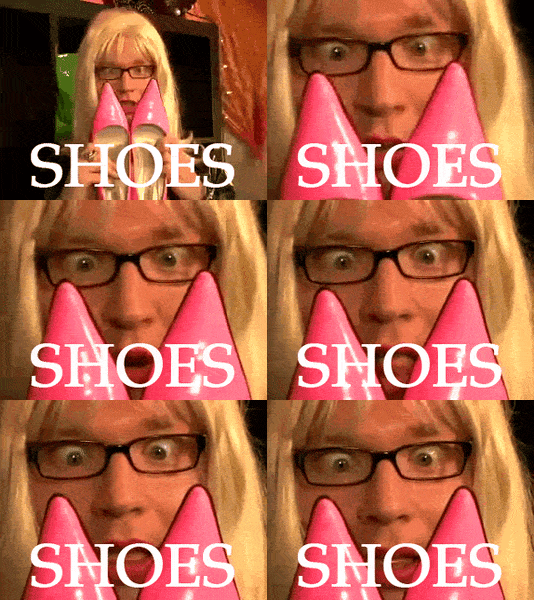
The news cut to a commercial. An ugly girl kept talking about her shoes, dreaming about shoes, and scoffing for shoes. “These shoes are 300 dollars. These shoes are 300 dollars. These shoes are 300 [cluckin’] dollars. LET’S GET ‘EM.” That guy was The OG Betch.


The news returned, more alarming than before. Techno-Swedish celebrity Basshunter kicked off the Senate meeting with the techno-Swedish version of the American national anthem, followed by his hit banger of the time, “The League of Legends Song,” known briefly as LOLA: “looooo-lo-lo-lo-lo-lo-looooo-lo-lo.” After Mr. Basshunter wiped his mouth with a handkerchief, then left, Senator Ted Stevens took the podium to delineate the crookery of the World Wide Web:
Washington’s solution to the Internet tubes being stuffed with profanity was simple defenestration of the tubes altogether. The maneuver is exactly comparable to dumping a box of Christmas lights out the car door onto the side of the highway, but on a World Wide scale.
The news switched to a crowd of angry Internet people. They were slicing the air angrily with their flip-phone cellular devices outside of the Senate council. The Internet is the homeland of the indigenous Internet people. Where were they to do Internet stuff without the Internet? The Internet people retaliated the only way they knew how:
By “blerging.”
Hard.
The Barcode Brothers were the bargain bin Italo Brothers for euro techno pop trance beatz.
Blergs
Blerging, as defined by the Oxford dictionary, is the act of logging onto the World Wide Web, typing words onto the screen of one’s e-device through the connected keyboard, to produce a literature composite known precisely as a “blerg post.” This aggregate of text may be used as a means of extended communication, longer than an SMS, but typically shorter than an essay.
The term “blerging” was historically coined as the undercover name given to the language of morse code used by Americans during WW2 to stealth from German decoders. In the modern day, the Internet people don’t do that.
The Quesht fer Computersh
The Internet people were ready to blerg: eager to save the Internet from President-elect Sarah Palin and Vice Diva Pop-star President Miku Hatsune. The news covered the campaign of the Internet people live. In order to get online, however, the Internet people needed an alternative device, as their flip-phones were too stupid to viably blerg online as a smartphone could. President-elect Palin had priced her new iPhone above the price point were most millennials could casually afford, thus censoring the Internet from e x p r e s s i o n and unionization via its own e-patriarchs’ nonchalant apathy.

The Internet people needed another efficient tool to incarnate their ideas into blergs. They knew, that once they could output blergs on a World Wide medium, they could telebeam the blergs to fellow constituents to take action with their aligning legislators. The pro-Internet politicians were the Internet people’s only hope against the brutish Palin Hatsune administration. It was through this Red, White, and Blue combustion that America would see her people, laws, and land, launch into the avenir.
While researching the online knowledge bases of the University of Google Wikipedia at their local library, the Internet people discovered the necessity of computers. “Computers […] are used for blerging,” said an Internet person spokeswoman on the news; “Blerging is good on computers.” The computer electronic device was the only consumer product sophisticated and powerful enough for the mass, streamlined blerging that the Internet people needed for their broad mission to save the Internet.


Bill Gates’s Windows manufactured computers, but they were too ugly for the Internet people to respectively blerg upon. Vista? The Internet people “could not even.” Steve Jobs, former Governor of Alaska, was the only manufacturer with a computer chic’n awesome enough for the Internet people to cruise the World Wide Web upon: The Blergintosh 95. After the Internet people paid his company’s Apple Tax, higher than Sarah Palin’s premium iPhone, the Internet people mounted the engine of their freedom.
They were equipped to go a’blergin’.

The Blergintosh 95

Disgusting.
Doesh Anyone Know How to Ushe Computersh?
The Internet people had their computers, but without guidance, they were a melange of themes and purposes, slugs and links, meymeys and blergs.
They needed a leader to help them become one e-people, one e-nation.
The first measurement of worth amongst the Internet people was the Dank Test: whoever could find the dankest meymey was to be ordained as leader of the Internet people.

A news closeup of an Internet person.
Throughout the gaggle, however, all were able to demonstrate dankilicious meymeys at their turn. The decision of leadership had stagnated at a draw. The Internet people, in their simplicity, thought to try the same test twice, thinking that meymeying harder would yield the leader they needed. Sensing the frustration from another failed—but dank—round, one twenty-something-year old stepped forward.
“What are we even blerging for?” said Darren.
“To save the Internet,” said some twenty-something-year old named Jessica.
“But beyond that,” Darren replied, “Once the Internet is saved, for what do we blerg?”

“When did everyone become such an exhibitionist?” —Darren, Twouble with Twitters, SuperNews!
Every Internet person on the scene stopped. No one in the news room moved anything other than their eyes in impromptu worry.
“There are no blergs in-the-Internet: only blergs for-the-internet. The Internet is Empty without us, but it Exists for-us… for-each-other… for-itself, in-itself.”
The Internet people didn’t really get it, but sensed that Darren would be the competent fit as their Internet Person Leader.
Darren accepted his role, but soon admitted that he didn’t know how to pilot a computer, much more a team of computer blergers.
Ctrl + Alt + Liberate
Darren and his eFlock went back to their computer manufacturer for computer navigation wisdom. The Apple manufacturer referred them to their Geniuses, who helped train the Internet people in the art of Blergintosh. Their B-tosh computers often broke due to the blerg load foisted upon them, requiring the need to draw from Insurance, or Care. The Internet people agreed, however, that the circumstance was “still better than Vista.”

While the Internet people trained, e-patriarch Darren was on the task of planning the blerging effort throughout the world, then eventually, throughout the cosmos. To prepare for his people’s debut onto the world’s stage, his coalition stocked up on cigarettes, coffee, and pornographic images for sexual stimulation.
On e-D Day, the Internet people funneled into one computer cafe named USBeeps that charged about five dollars an hour per wi-fi user. The news cameras watched the Internet people prep as their Dorito cheese fingers smeared the Blergintosh keyboards like war paint.

Darren was staring at his computer screen.
“Are we ready?” asked Jessica.
Darren kept looking at his Blergintosh’s monitor:

He wept. “Today, history is blerged.”
The Internet people were scared, but Darren spurred them into formation. “Are we people?” he mildly yelled in an awkward attempt at a masculine declamation, “Or are we Internet people!?”
The cafe roared while rattling their Dorito bags and splashing their Mountain Dew bottles.
Darren lead the way.
The troop blerged.
They blerged on private websites.
They blerged on social networks.
They blerged on sales and auction pages.
They blerged the first microsite millionaires.
With practice and authority, the Internet people eventually started blerging for elite intelligence processing websites, such as Yahoo.com.
The Internet people madly filled the Internet with their thoughts, feelings, experiences, and Love.
They were the founding fathers and moving mothers of the World Wide Web. They… became the content of every .com, .org, and .blerg.
The e-Scape
Once the Internet people had enough blergs in their portfolio, Darren started networking with legislators to garner their pro-Internet support. The politicians were immediately impressed. They’ve never seen blergs so “thick” and “rich” before. They became confident that the Internet would be a tool used for Good, not Evil.
The Palin Hatsune administration took notice.


Vice Diva Pop-star President Miku Hatsune started bombarding the Internet people’s blergs with ASCII spam to dilute the efficacy of the blergs. The Internet people frantically retaliated by hitting the backspace of their Blergintoshes as fast as they could, even crop deleting when the ASCII flood was overwhelming.

Darren hit the deck at Washington. Palin was ready to hit the switch to turn off the World Wide Web at the Tube Termination ceremony she arranged at Capitol Hill. The Internet providers were there, weeping intensely at a faux coffin made for the Internet. Within the casket was a cornucopia stuffed with ethernet wires and meymeys, “Here, the Dank lie.”
“Okay, Dears, we’ve had enough of this ‘Internet’,” Palin said to the audience. “It’s making the kiddies queer-o-sexuals and removing American jobs from America.”
The news channel zoomed in on Darren and the pro-Internet legislators racing down the aisle of the ceremony. There were explosions behind them. The ASCII sabotage was overloading the Blergintoshes. USBeeps was no longer on the map; Internet people were falling fast.


With printed PDF versions of blergs in hand, Darren shoved a stack to Palin, then took the mic:

I looked from my TV screen back to my WoW screen. I made my Blood Elf jump with my Vista keyboard. Space, space, space.
“Let’s Go A’blergin’”
by Mr. Bohemian
